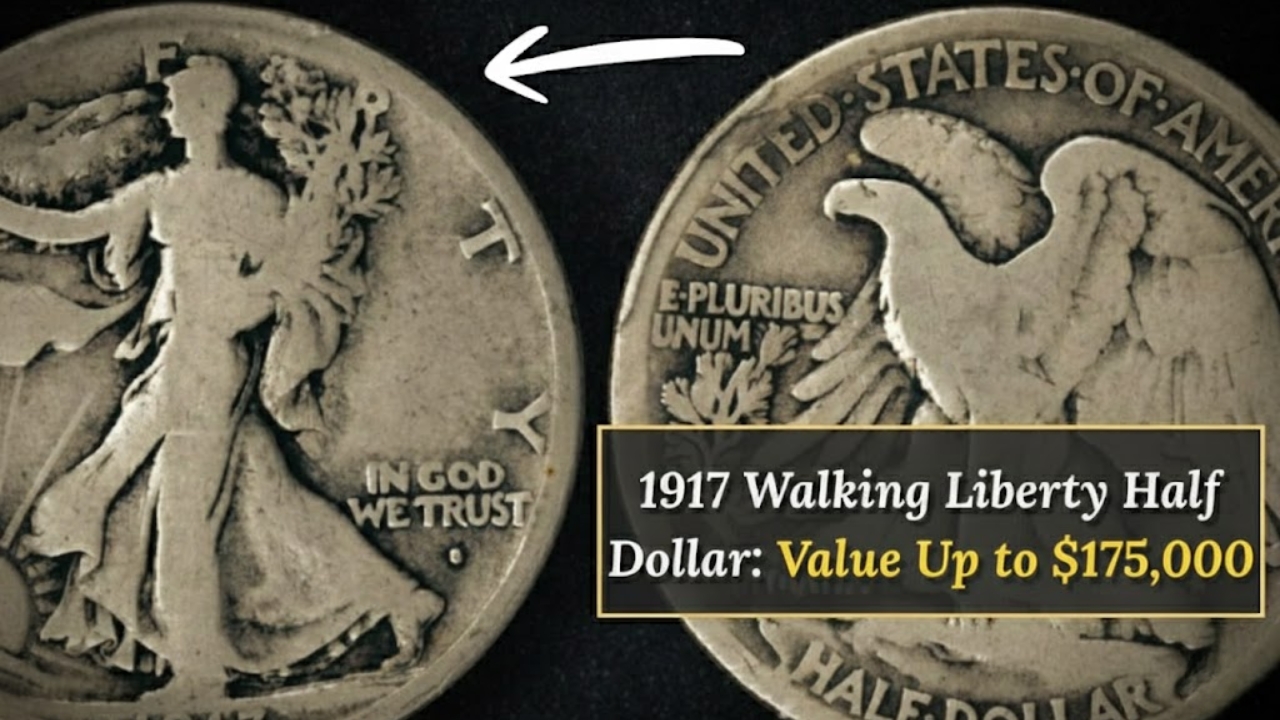
The Walking Liberty Half Dollar is one of the most iconic coins in American numismatic history. Designed by Adolph A. Weinman, it was first minted in 1916 and continued until 1947. Among the series, the 1917 issue stands out as particularly significant due to its variations, historical context, and rarity. Collectors prize this coin not only for its beauty but also for its potential value, which in rare cases can reach up to $175,000.
Historical Background
The year 1917 was a pivotal time in American history. The United States had just entered World War I, and the economy was undergoing rapid changes. Coinage reflected both patriotic symbolism and artistic innovation. The Walking Liberty design, with Lady Liberty striding confidently toward the dawn of a new day, symbolized freedom and progress. The reverse featured a majestic eagle perched on a rock, representing strength and resilience.
Design Features
The obverse of the coin depicts Lady Liberty draped in the American flag, walking toward the rising sun with branches of laurel and oak in her left hand. This imagery conveys both peace and military strength. The reverse shows a powerful eagle with wings partially spread, perched on a mountain crag with a sapling of mountain pine growing from the rock. The artistry and symbolism make this coin one of the most admired designs in U.S. coinage.
Mint Marks and Varieties
The 1917 Walking Liberty Half Dollar was produced at three different mints: Philadelphia (no mint mark), Denver (D), and San Francisco (S). What makes this year especially interesting is the placement of the mint mark. Some coins have the mint mark on the obverse, while others have it on the reverse. This dual placement creates distinct varieties that collectors seek.
Varieties of 1917 Half Dollar
- 1917 (Philadelphia, no mint mark)
- 1917-D Obverse Mint Mark
- 1917-D Reverse Mint Mark
- 1917-S Obverse Mint Mark
- 1917-S Reverse Mint Mark
These varieties significantly influence the coin’s rarity and value.
Rarity and Collectibility
The rarity of the 1917 Walking Liberty Half Dollar depends on both the mint location and the placement of the mint mark. Coins with the mint mark on the obverse are generally scarcer than those with the reverse mint mark. Additionally, coins struck at the San Francisco Mint tend to be more difficult to find in high grades. Collectors often seek complete sets of all varieties, which adds to the demand.
Value Factors
Several factors determine the value of a 1917 Walking Liberty Half Dollar. These include condition, mint mark, strike quality, and historical significance. Coins in circulated condition may be worth only a modest amount, while those in pristine, uncirculated grades can command extraordinary prices.
Key Value Determinants
- Mint mark location (obverse vs. reverse)
- Mint of origin (Philadelphia, Denver, San Francisco)
- Condition (circulated, uncirculated, proof-like)
- Rarity of surviving examples
- Eye appeal and strike sharpness
Grading and Condition
Grading plays a crucial role in determining value. The Sheldon Scale, ranging from Poor (P-1) to Mint State (MS-70), is used to assess coins. For the 1917 Walking Liberty Half Dollar, coins graded MS-65 or higher are extremely rare and valuable. Even small differences in grade can result in large differences in price.
Example Grading Scale for 1917 Half Dollar
- Good (G-4): Heavy wear, major details visible
- Fine (F-12): Moderate wear, Liberty’s figure visible
- Extremely Fine (EF-40): Light wear, sharp details
- About Uncirculated (AU-50): Slight wear on high points
- Mint State (MS-60 to MS-70): No wear, full luster
Value Chart for 1917 Walking Liberty Half Dollar
Below is a general guide to values based on condition and variety. Prices can fluctuate depending on market demand and auction results.
| Variety | Good (G-4) | Fine (F-12) | Extremely Fine (EF-40) | Mint State (MS-65) |
|---|---|---|---|---|
| 1917 (No Mint Mark) | $20 | $40 | $150 | $5,000+ |
| 1917-D Obverse | $50 | $150 | $1,000 | $50,000+ |
| 1917-D Reverse | $30 | $75 | $400 | $15,000+ |
| 1917-S Obverse | $75 | $200 | $1,500 | $175,000+ |
| 1917-S Reverse | $40 | $100 | $600 | $20,000+ |
These values are approximate and can vary depending on specific coin characteristics.
Auction Records and Notable Sales
Some 1917 Walking Liberty Half Dollars have achieved remarkable prices at auction. The rarest examples, particularly the 1917-S Obverse Mint Mark in high grades, have sold for over $150,000. Such sales highlight the coin’s desirability and the lengths collectors will go to acquire these treasures.
Investment Potential
The 1917 Walking Liberty Half Dollar is not only a collector’s item but also a potential investment. Rare coins often appreciate in value over time, especially those with historical significance and artistic merit. Investors should focus on coins in higher grades, as these tend to yield the greatest returns.
Tips for Collectors
For those interested in acquiring a 1917 Walking Liberty Half Dollar, careful consideration is essential. Here are some tips:
- Always buy from reputable dealers or auction houses.
- Verify authenticity and grade through professional certification services.
- Focus on eye appeal and strike quality.
- Consider building a complete set of varieties for added value.
- Store coins properly to preserve condition.
Preservation and Care
Proper preservation is vital to maintaining the value of rare coins. Coins should be stored in protective holders, away from humidity and direct sunlight. Handling should be minimized, and when necessary, gloves should be used to avoid oils and dirt from fingers.
Conclusion
The 1917 Walking Liberty Half Dollar is a masterpiece of American coinage, combining artistry, symbolism, and historical significance. Its rarity and potential value make it one of the most sought-after coins in numismatics. Whether collected for passion or investment, this coin represents a tangible piece of history and a symbol of enduring freedom. For collectors fortunate enough to own one, especially in high grades, the 1917 Walking Liberty Half Dollar can indeed be worth up to $175,000.
This guide provides a comprehensive overview of its history, varieties, grading, and value, offering collectors and investors the knowledge needed to appreciate and pursue this remarkable coin.